How Phone Addiction Creates an Unregulated Nervous System (And What I Did About It)
You probably don't think about what scrolling does to your nervous system.
You reach for your phone between meetings when you're tired and wired. You scroll in the driveway before walking inside. You use it to avoid discomfort, to regulate when you feel off, to fill any gap in your day.
What you're absorbing in that tiny screen doesn't just stay on the screen. It seeps into your subconscious: comparison with strangers, emotional reels without context, other people's worldviews crowding out your own. The constant stimulation keeps your nervous system activated, your dopamine pathways hijacked, your attention fragmented.
Two years ago, I stopped posting on Instagram and deleted the app. Seven months ago, I committed to giving up the scroll for good. What happened wasn't just relief from FOMO. It was a complete shift in how my nervous system functioned day to day.
Here's what I learned about phone addiction, nervous system regulation, and how somatic exercises became my path back to presence.
What's Happening in Your Nervous System
When you scroll, you're not just consuming content. You're training your nervous system to seek constant stimulation.
Each swipe triggers a small dopamine release. Your brain starts associating any moment of pause or discomfort with the need for digital input. This creates a dysregulated baseline where stillness feels intolerable and your system craves the next hit of novelty.
The nervous system doesn't distinguish between types of stimulation. Whether it's work emails, Instagram reels, or news feeds, your sympathetic nervous system stays activated. You're essentially living in low-grade fight-or-flight, scanning for the next piece of information, unable to downregulate even when your schedule allows rest.
Over time, this pattern erodes your capacity to hear your own thoughts, feel your own needs, or access the parasympathetic state where restoration happens. This is where somatic exercises become essential. Unlike cognitive strategies that try to think your way out of dysregulation, somatic yoga works directly with the body to retrain nervous system patterns.
This short somatic practice supports gentle grounding when your nervous system feels overstimulated or scattered. It can be helpful after screen time or when you notice yourself feeling disconnected from your body.
The Practice: Somatic Yoga for Scattered Energy
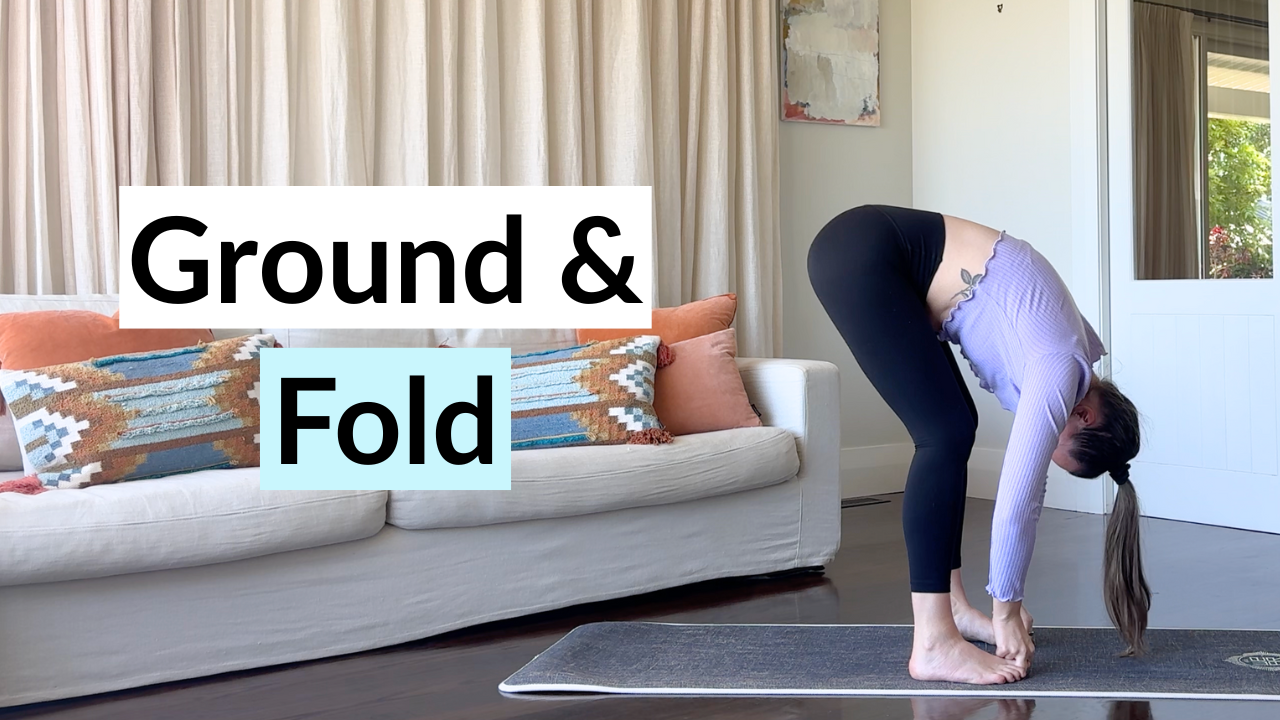
Physically, during this practice you'll activate your hamstrings. Energetically, you'll come back to baseline.
These somatic exercises work specifically with nervous system regulation. Rather than pushing through poses, you're inviting your body to release the activation that builds up from constant digital stimulation.
Use it when your mind feels hijacked by constant input, when you need to hear your own thoughts again, or when you notice the pull to scroll instead of feel.
What Changed When I Gave Up the Scroll
I expected spaciousness and relief. I didn't expect everything else that came with it.
Everything got calmer. Not just my external environment, but my internal landscape. The constant hum of comparison and stimulation quieted. I could feel the difference between my own thoughts and absorbed narratives.
Creativity returned tenfold. I can feel ideas alive in my field now. I'm convinced it's because I'm no longer consuming constant content. There's room for my own thoughts to form and develop without being immediately crowded out.
I feel less triggered overall. Without the scroll, I'm not absorbing other people's emotional states through my screen. My baseline is steadier. I respond to my actual life instead of a curated version of everyone else's.
My relationship improved. I stopped comparing my partner to highlight reels. I stopped mentally cataloging what other relationships looked like and started being present for my own.
I could hear about friends' lives firsthand. Instead of already knowing everything before we caught up, conversations had texture and discovery again.
I choose what I consume now. I follow 2-3 creators at a time through emails, substacks, or podcasts. I have space to actually learn and implement instead of passively absorbing.
I feel more empowered and in control of my energy. I run the show. Not my screen.
My daily somatic yoga practice deepened. When I stopped scrolling, I could hear myself more clearly. My mind stopped being hijacked. The somatic exercises I'd been doing suddenly had space to actually work. I have a better understanding of what my body needs because there's space to actually feel it.
The Hacks That Worked
Deleted Instagram and Facebook off my phone. This is non-negotiable. If the app is there, you'll use it.
Replaced social media apps with a family photo app. When I (still) habitually pick up my phone, I click on my family photo app and see pictures of my nephews instead of the soup of the internet. The habit gets redirected rather than eliminated.
Installed a Chrome plugin that blocks feeds but allows messages. This changed everything. I can still see messages on Facebook and Instagram through my desktop computer only, and look up people or brands for research, but I don't get bombarded with feeds, ads, or stories. (The plugin is called "News Feed Eradicator" or similar tools.)
Deleted Facebook Messenger from my phone. I found a loophole where you can click into Facebook through the Messenger app, so having this on my phone wasn't safe for me. I moved conversations to WhatsApp or responded via desktop. Sometimes I still need to download it for real-time logistics when I'm not at a computer, and I really notice how polluted my mind feels when I use it as an excuse to scroll.
Built a somatic exercise practice that replaced the scroll. Instead of reaching for my phone when I felt uncomfortable, I started doing 2-3 minute somatic exercises. Simple breathwork, a brief body scan, or one grounding pose. These micro-practices gave my nervous system what it actually needed: regulation, not distraction.
Gave it time. It felt weird at first. But after a few months, the pull weakened. My nervous system recalibrated to a new baseline where stillness didn't require digital input. The somatic yoga practices I'd been doing helped speed this process by giving my body an alternative way to regulate.
Integration: What This Means
I firmly believe that being addicted to social media keeps your world small despite making you think it's expanding. It's not just what you're consuming. It's also what you're not pursuing.
Your creativity, your relationships, your capacity to be present: all of this gets compromised when your attention is constantly fractured.
This isn't about going completely offline or rejecting technology. It's about recognizing when the tool is using you instead of you using it.
When you have a somatic practice that brings you back to stillness, you start to really hear yourself. You notice what's hijacking your mind. You catch the patterns faster. The scroll is just one pattern. But it's a significant one because it hijacks the very mechanism you need to notice all the others: your attention.
Somatic exercises give you an embodied alternative. Instead of reaching for your phone to regulate, you learn to resource yourself from within. The same nervous system that craves dopamine hits can be retrained through consistent somatic yoga practices to find regulation through breath, movement, and presence.
If you're struggling with a scrolling problem, take it seriously. Treat it like what it is: a dysregulation pattern that keeps your nervous system activated and your attention fragmented.
Delete the apps. Install the plugins. Build a daily somatic practice. Give it a few months. Notice what emerges when you're not filling every pause with stimulation.
You might find, like I did, that what you thought was connection was actually keeping you from connecting. Connecting to yourself, to your creativity, to your life as it is.
Key Takeaways
Scrolling trains your nervous system to seek constant stimulation, creating a dysregulated baseline where stillness feels intolerable
The nervous system doesn't distinguish between types of digital input. Work emails, social feeds, and news all keep you in sympathetic activation
Somatic exercises offer an embodied alternative to scrolling. When you replace the scroll with brief somatic yoga practices, you retrain your nervous system to find regulation through your body instead of your screen
Creativity and self-trust require space. When you're constantly consuming, there's no room for your own thoughts to form
It takes time to recalibrate. Your nervous system needs a few months to adjust to a new baseline without constant digital dopamine hits
A daily somatic practice deepens when you remove competing stimulation. You can actually hear yourself when your mind isn't being hijacked
The scroll isn't just what you consume. It's what you're not pursuing. Attention is finite, and phone addiction keeps your world smaller than it needs to be