Somatic Tension Release: What Your Body Holds When You're Making Hard Decisions
You're standing at a crossroads. Maybe it's a career shift, a boundary you know you need to set, or a life change that feels both necessary and terrifying. And while your mind cycles through the decision, your body is already responding. Your shoulders have crept toward your ears. Your jaw is clenched. Your chest feels tight, compressed, like there's not quite enough room to breathe fully.
Your nervous system is processing the weight of choice. When you're anticipating change, especially change that requires letting go of something familiar, your body registers uncertainty. Uncertainty activates your sympathetic nervous system, the branch responsible for mobilization and protection.
What most people don't realize is that the tension you're carrying in your shoulders, jaw, and chest is part of how your body is attempting to brace for what's coming. The physical sensation and the decision you're facing are connected through your nervous system's response to anticipated change.
What's Happening in Your Nervous System
When you're contemplating a significant life change or sacrifice, your nervous system responds to psychological uncertainty the same way it responds to physical threat. Both trigger similar patterns: muscle bracing, shallow breathing, and activation of your sympathetic branch.
Your shoulders rise and tighten as part of a protective startle reflex. Your jaw clenches as your body prepares to either speak or hold back what needs to be said. Your chest constricts because your diaphragm, the primary breathing muscle, operates under the influence of stress hormones that prioritize quick, shallow breaths over deep, restorative ones.
This response serves you in the short term by helping you stay alert and ready. When the decision process stretches over days or weeks and you're holding this tension chronically, your nervous system remains in a state of low-grade activation. You might notice that even when you're not actively thinking about the decision, your body still feels tight, guarded, or on edge.
The tension in your shoulders, jaw, and chest becomes a holding pattern. Your nervous system maintains a state of readiness. This readiness depletes your energy, disrupts your sleep, and keeps you from accessing the calm, grounded state where clarity and intuition live.
A Practice for Releasing What You're Holding
This somatic tension release practice guides you through a series of gentle movements and breath work designed to signal safety to your nervous system. The focus is on the three areas where decision-related tension most commonly accumulates: the shoulders, jaw, and chest.
The practice works by engaging your parasympathetic nervous system, the branch responsible for rest, digestion, and recovery. When you move slowly, breathe intentionally, and bring awareness to areas of holding, you give your body permission to release the bracing pattern it has been maintaining.
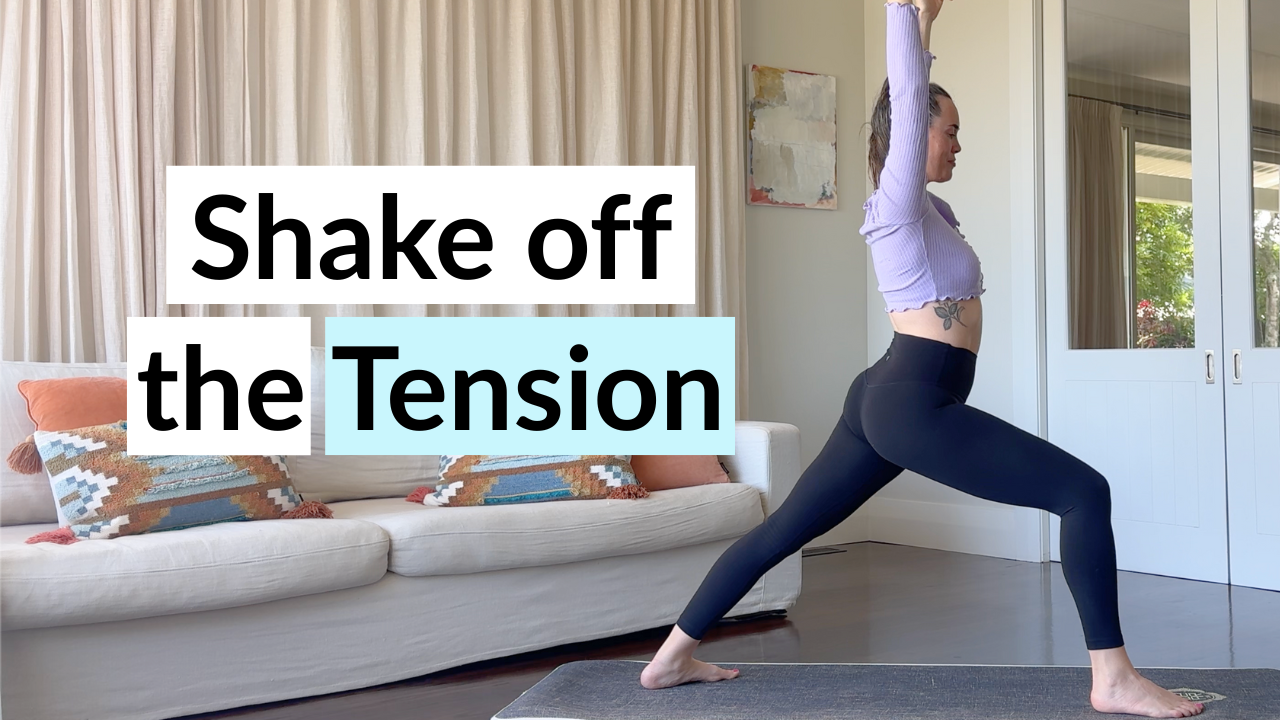
How to Approach This Practice
You can benefit from this practice whether or not you have a specific decision in mind, though you might notice that certain movements bring up awareness of what you've been carrying. The invitation here is simply to notice without needing to fix, analyze, or solve anything.
Start by finding a comfortable position, either seated or lying down. Give yourself permission to move slowly. The focus is on creating space in your body where tension has been residing rather than achieving a particular stretch or reaching a specific position.
As you move through the practice, pay attention to your breath. You might notice that when you begin, your breathing is shallow or held. This is information. Your breath will naturally deepen as your nervous system begins to register that it's safe to let go.
When you reach the shoulder releases, you may become aware of just how much you've been holding there. Many people carry the weight of responsibility, the burden of decision-making, and the tension of anticipation in this area. As you roll your shoulders back and down, imagine releasing both the physical tension and the emotional weight you've been carrying.
The jaw releases are particularly potent because the jaw is directly connected to your ability to speak, to express, to say yes or no. When you're contemplating a decision that requires you to set a boundary or communicate something difficult, your jaw often tightens in anticipation. Gentle jaw movements, opening and closing, side to side, can help release this held expression.
The chest opening movements work directly with your breath and your heart space. When your chest is tight, your breath becomes shallow, which keeps your nervous system activated. By creating expansion across your chest, you're making more room to breathe, which signals to your nervous system that it can move from mobilization into rest.
Throughout the practice, you might notice sensations arising. Tingling, warmth, subtle shifts in how your body feels in space. These are signs that your nervous system is recalibrating, releasing held patterns, and finding a new baseline.
The Reality of Sacrifice and Somatic Response
When you're facing a decision that involves sacrifice, whether leaving a stable job, setting a boundary that might disappoint someone, or choosing one path over another, your body responds before your mind fully processes what's at stake.
The concept of sacrifice often carries emotional weight. It implies loss, giving up something valuable, and uncertainty about what comes next. Your nervous system picks up on this emotional landscape and responds accordingly. The tightness in your shoulders might be your body's way of bracing against the loss. The tension in your jaw could be the words you're not yet ready to speak. The constriction in your chest might be your body protecting your heart from potential disappointment or grief.
This somatic response is information. Your body is processing the magnitude of what you're considering, and it's doing so in its own language: sensation, tension, breath, and movement.
When you engage in somatic tension release practices, you create space for your body to process what's happening without remaining in a chronic state of bracing. You allow your nervous system to complete its response cycle rather than staying stuck in preparation mode.
Many people find that after releasing physical tension, they have more clarity about the decision they're facing. This comes from physiology. When your nervous system is stuck in a protective pattern, your access to higher-order thinking, intuition, and creative problem-solving is limited. Your brain is focused on threat detection rather than nuanced decision-making.
By practicing somatic tension release, you're essentially telling your nervous system, "I see you. I acknowledge what you're holding. And I'm giving you permission to let go, at least for now." This creates a window of opportunity for clarity, for connection to your own inner guidance, and for a more grounded approach to the decision at hand.
What Happens After You Practice
After you complete a somatic tension release practice, you might notice several shifts. Your breathing may be deeper and more natural. Your shoulders might sit lower, away from your ears. Your jaw might feel looser, less clenched. Your chest might feel more open, like there's more space to breathe.
These physical changes often accompany subtle psychological shifts as well. You might feel less urgency around the decision you're facing. Your nervous system is no longer in a state of constant readiness. You might notice that thoughts about the decision feel less intrusive, less charged with anxiety or dread.
Some people report feeling more connected to their intuition after releasing somatic tension. This makes sense from a nervous system perspective. When you're chronically activated, your access to the ventral vagal pathway, the part of your nervous system associated with social engagement, connection, and intuitive knowing, is limited. By downregulating your sympathetic activation through somatic practice, you create the conditions for this more integrated state to emerge.
The decision itself remains, and your relationship to it has shifted. The sacrifice required might still feel significant, and it no longer feels paralyzing. You might have more capacity to hold both the weight of what you're considering and the trust that you can navigate whatever comes next.
Integration and Perspective
Somatic tension release creates the conditions in your body for you to be present with what you're facing, rather than constantly bracing against it. When you release the physical holding patterns that accompany difficult decisions, you create space for a different kind of engagement with your life.
When you work with your nervous system's responses as valuable information rather than pushing through tension or ignoring what your body is telling you, you develop a more integrated approach to decision-making.
The practice of releasing tension from your shoulders, jaw, and chest is ultimately a practice of coming back to yourself. You're acknowledging that you can let your body process what it needs to process. You're building trust in your capacity to navigate this decision, this sacrifice, this change.
The path forward might still require time to become clear, and the sacrifice might still feel significant. You're approaching the decision from a more regulated, grounded place. You're making choices from a state of embodied presence rather than chronic activation.
Key Takeaways
Your body responds to the anticipation of sacrifice and change by creating protective tension patterns, particularly in the shoulders, jaw, and chest.
This tension is your nervous system's way of bracing for uncertainty, a natural response to the weight of significant decisions.
Somatic tension release practices work by engaging your parasympathetic nervous system, which allows your body to move from protective bracing into a more regulated baseline.
The physical release of tension often creates space for mental clarity and access to intuition by allowing your nervous system to operate from a less activated state.
Practicing somatic exercises regularly helps you build the skill of recognizing and releasing tension before it becomes a chronic holding pattern.
The practice creates conditions in your body where you can be present with what you're facing rather than constantly defending against it.